
AI / Human Performance / Productivity
Mental Health Hybrid app
Designing the MVP of an AI-powered platform for human performance and cognitive clarity
BE.ME AI was an early-stage startup building an AI-powered product around human performance, productivity, and cognitive clarity. It was designed for founders, CEOs, and board members operating under sustained, high-stakes pressure, the people whose decisions carry the most weight and who have the least room to run on depleted focus. The founders had developed the BE.ME Operating System, a structured methodology for helping these high-pressure leaders understand their state, build better daily habits, and make clearer decisions.
The product existed because the methodology needed to become usable in everyday life. It could not remain a conceptual framework, and it could not become another generic productivity app. The experience had to translate complex personal-performance ideas into onboarding, dashboard structure, daily workflows, and AI guidance that felt practical, trustworthy, and calm.
I worked as Lead Product Designer across the MVP definition, product strategy, UX research, information architecture, AI interaction model, design system, high-fidelity UI, and prototype. The challenge was to make an abstract operating system feel like a product people could understand quickly and return to without friction.
Design highlights
What changed in the experience.
Methodology translated into product structure
The operating system became onboarding, dashboard hierarchy, daily workflows, and guidance moments.
Aura defined as a product companion
AI guidance was designed as contextual support inside the experience, not as a detached chatbot.
Progressive learning model
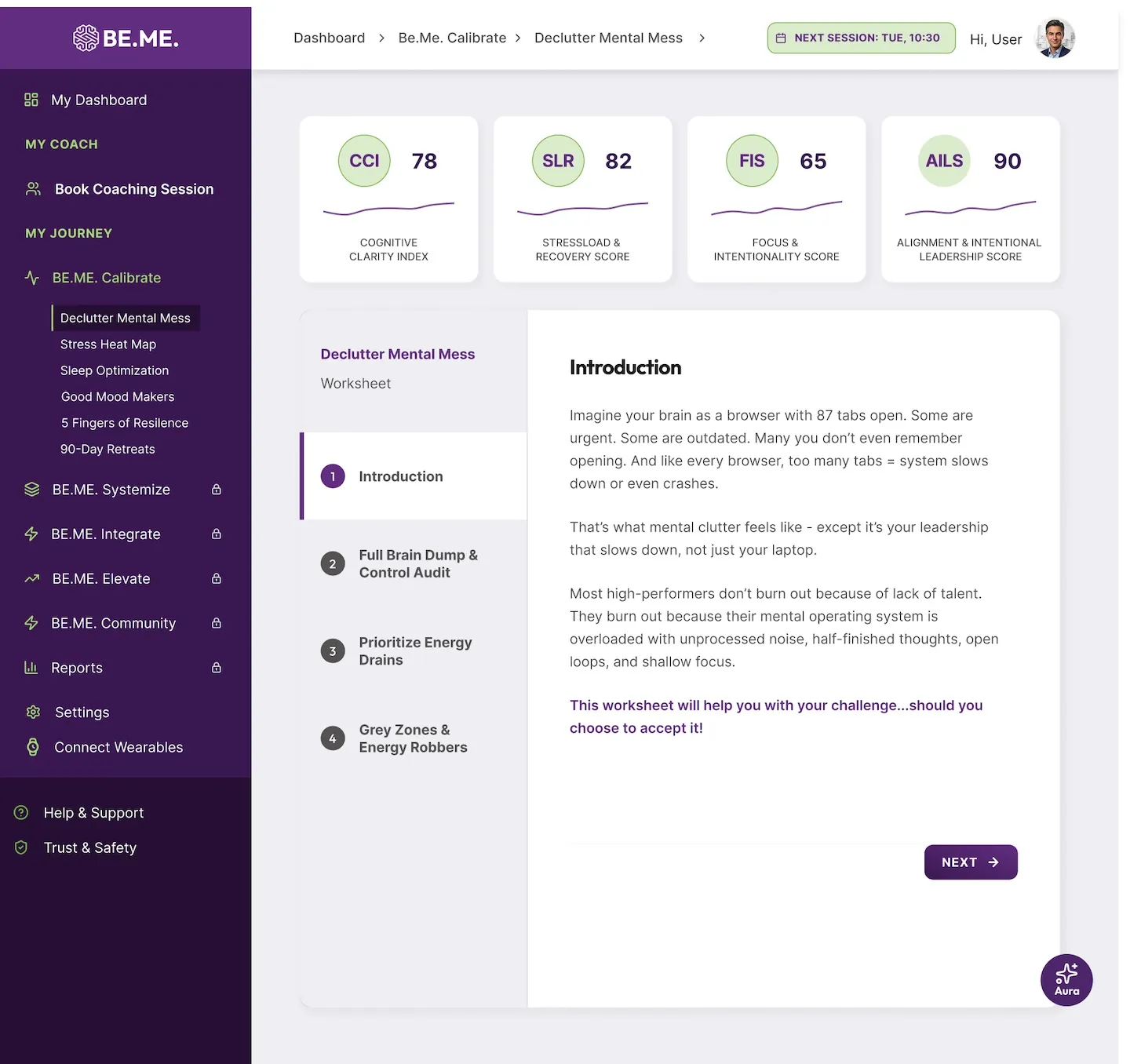
Users could learn the methodology through use instead of absorbing the entire framework upfront.
MVP scope made concrete
The product vision was narrowed into the smallest coherent experience the founders could validate.
Reusable design foundation
Components, tokens, and interaction principles supported rapid iteration across the MVP.
Project Overview
BE.ME's founders had a clear methodology but not yet a product. The engagement covered the product definition needed to turn the BE.ME Operating System into an MVP the founders could review, test, and discuss with confidence: an experience that made an abstract performance framework usable in everyday life.
The Challenge
The founders had a clear methodology, but the product experience still needed to be defined. The challenge was to turn the BE.ME Operating System into a digital product that felt intuitive, credible, and useful in daily life without overloading users with theory: practical experiences instead of abstract concepts, low cognitive load across onboarding and daily use, AI that felt supportive rather than intrusive, and an MVP small enough to validate the vision quickly.
Discovery
Discovery focused on understanding the operating methodology deeply enough to decide what should become product structure and what should remain explanatory context. The work mapped the user's likely mental model, the moments where guidance was needed, and the first journeys the MVP had to support, prioritizing scope around validation rather than completeness and aligning the founders around a product vision that could be designed and prototyped.
Product Strategy
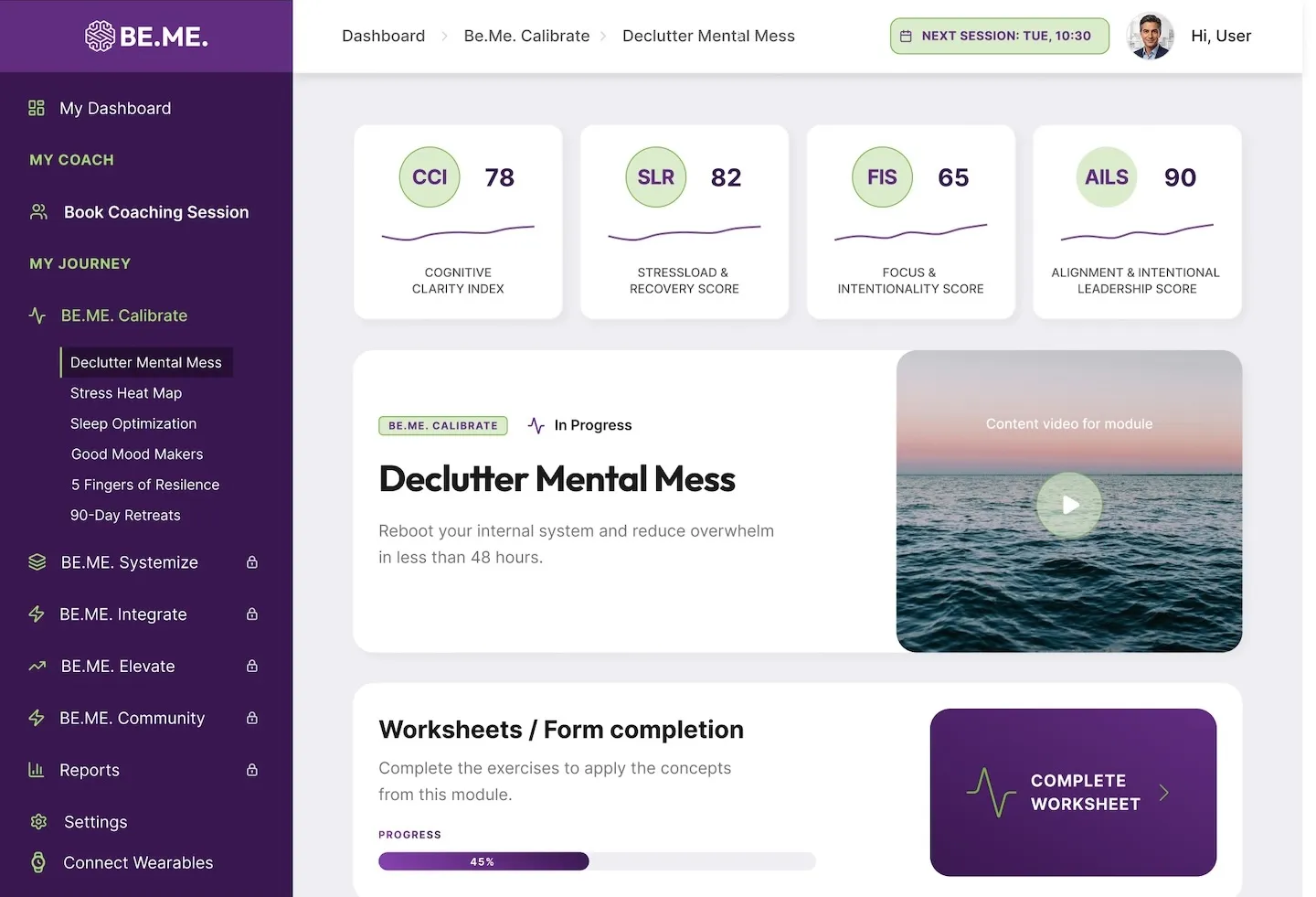
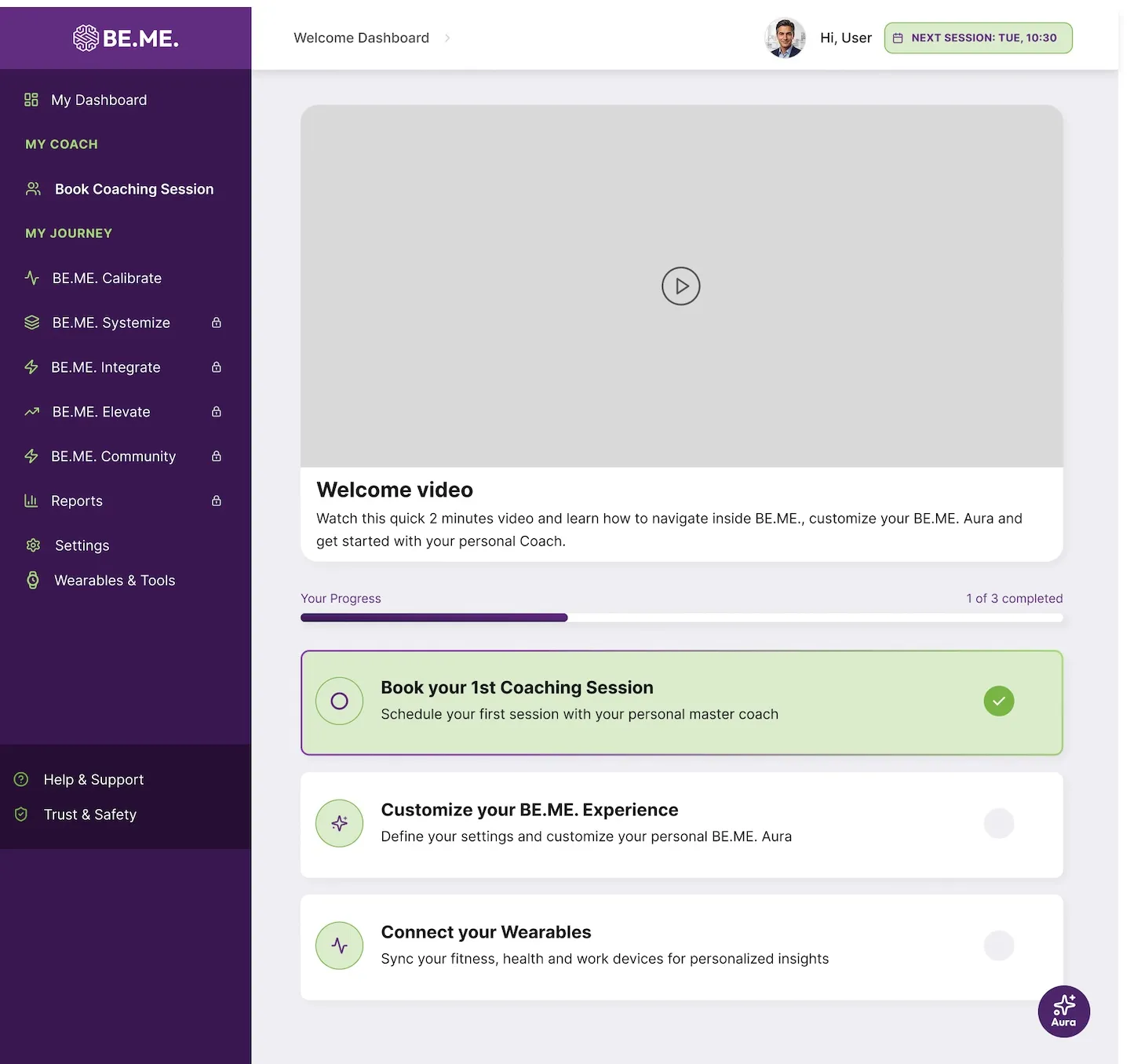
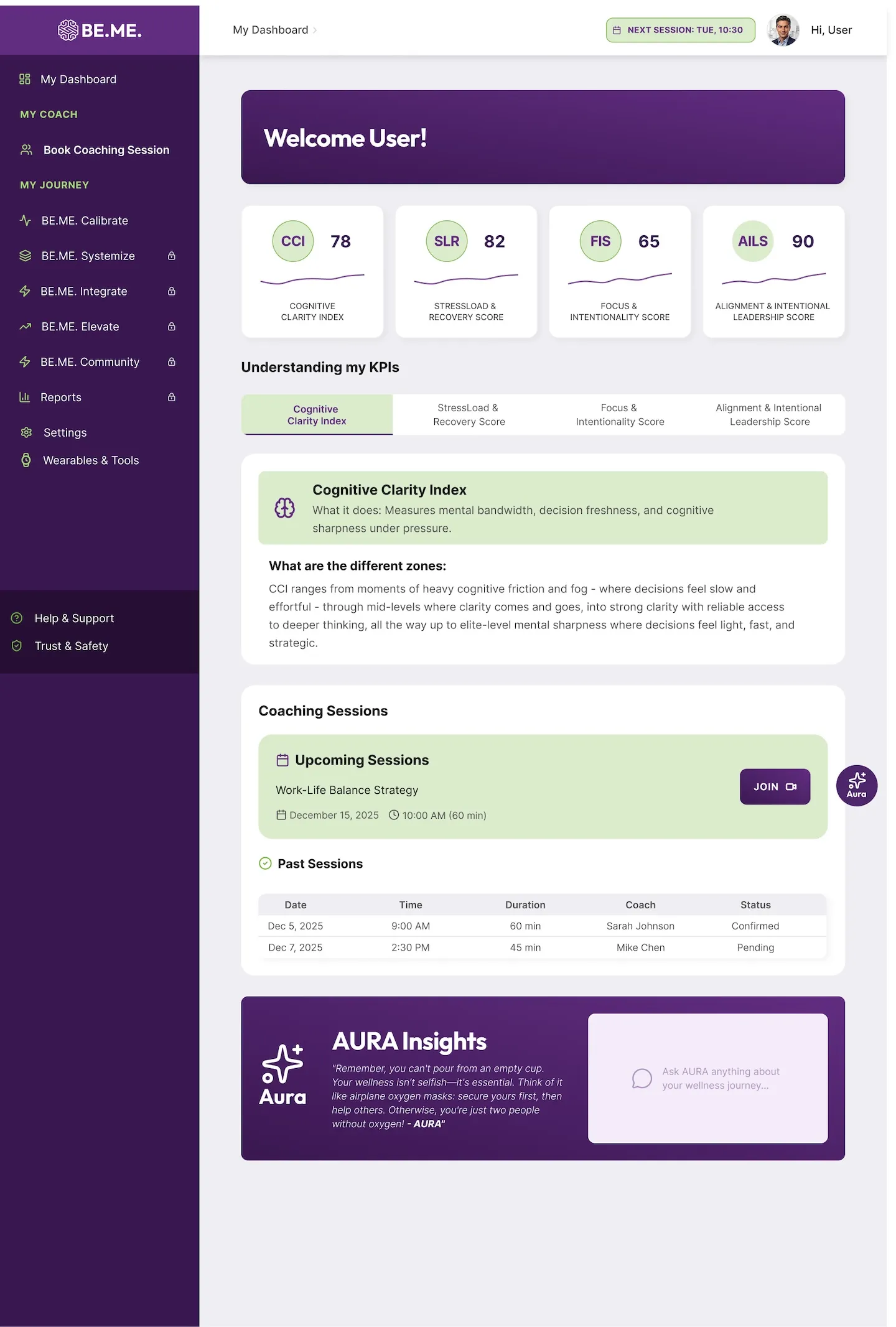
The product was structured around a small set of decisions: how users enter the system, how they learn the methodology progressively, how the dashboard organizes attention, and where AI should reduce effort. Onboarding introduced the system in stages instead of front-loading every concept, the navigation stayed direct, and MVP features were prioritized around learning, daily engagement, and founder validation.
Designing AI as a Product Guide
Aura was intentionally designed as an integrated product companion rather than a generic chatbot. Its role was to explain methodology concepts in context, guide users through the product without replacing its navigation, help interpret information and next steps, and maintain engagement through supportive, low-pressure prompts, kept human-centered, bounded, and connected to the user's goals.
User Experience
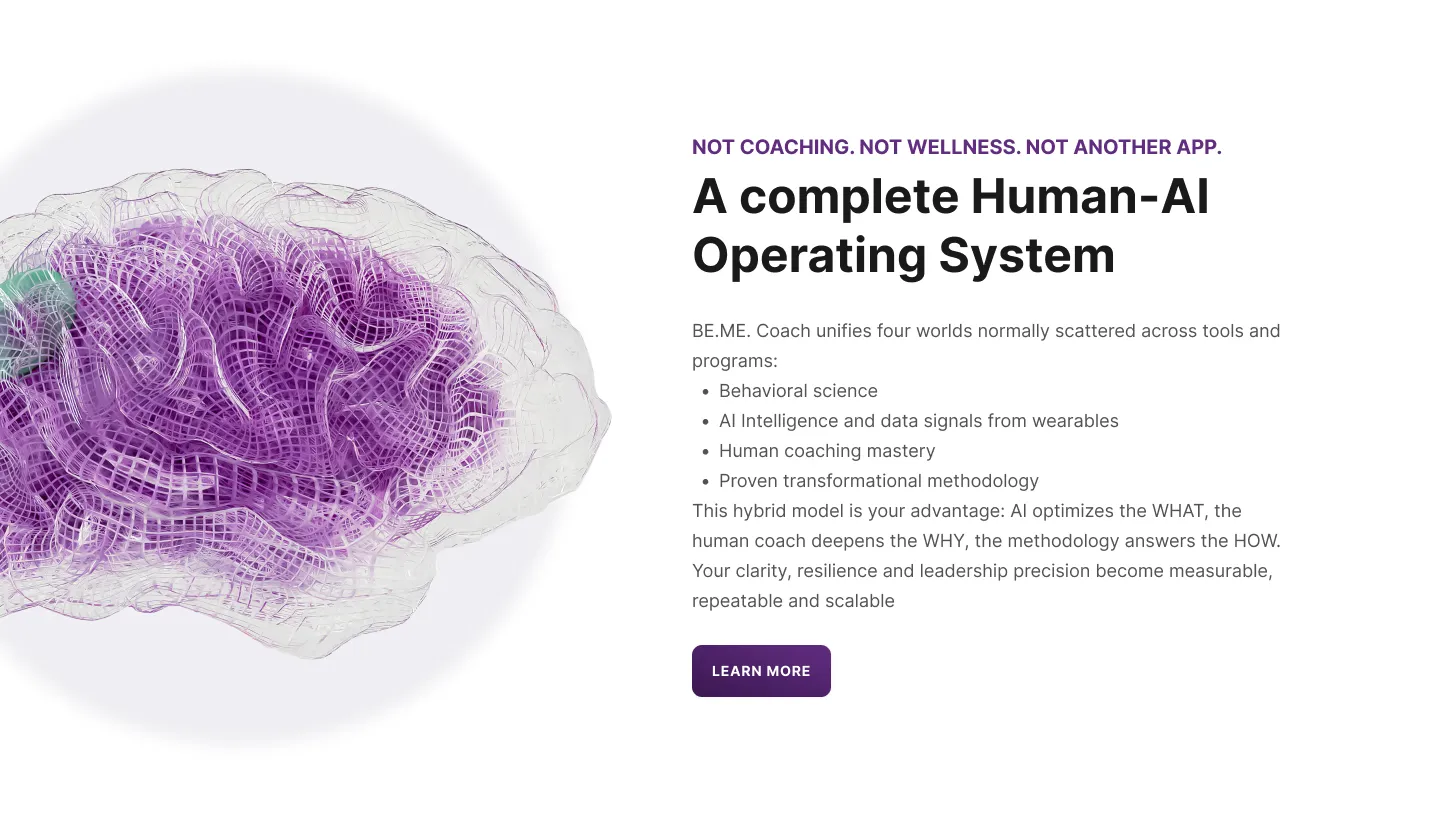
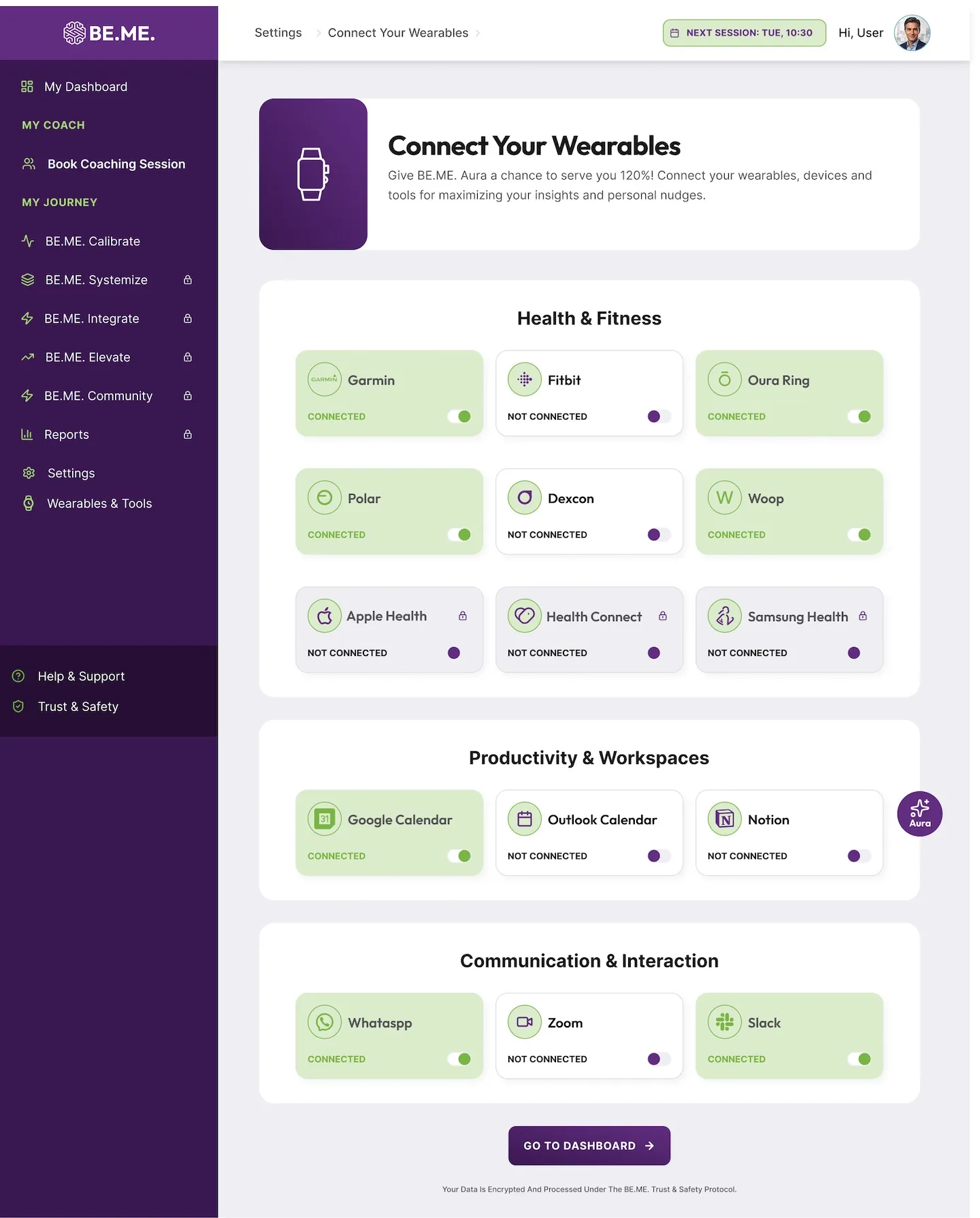
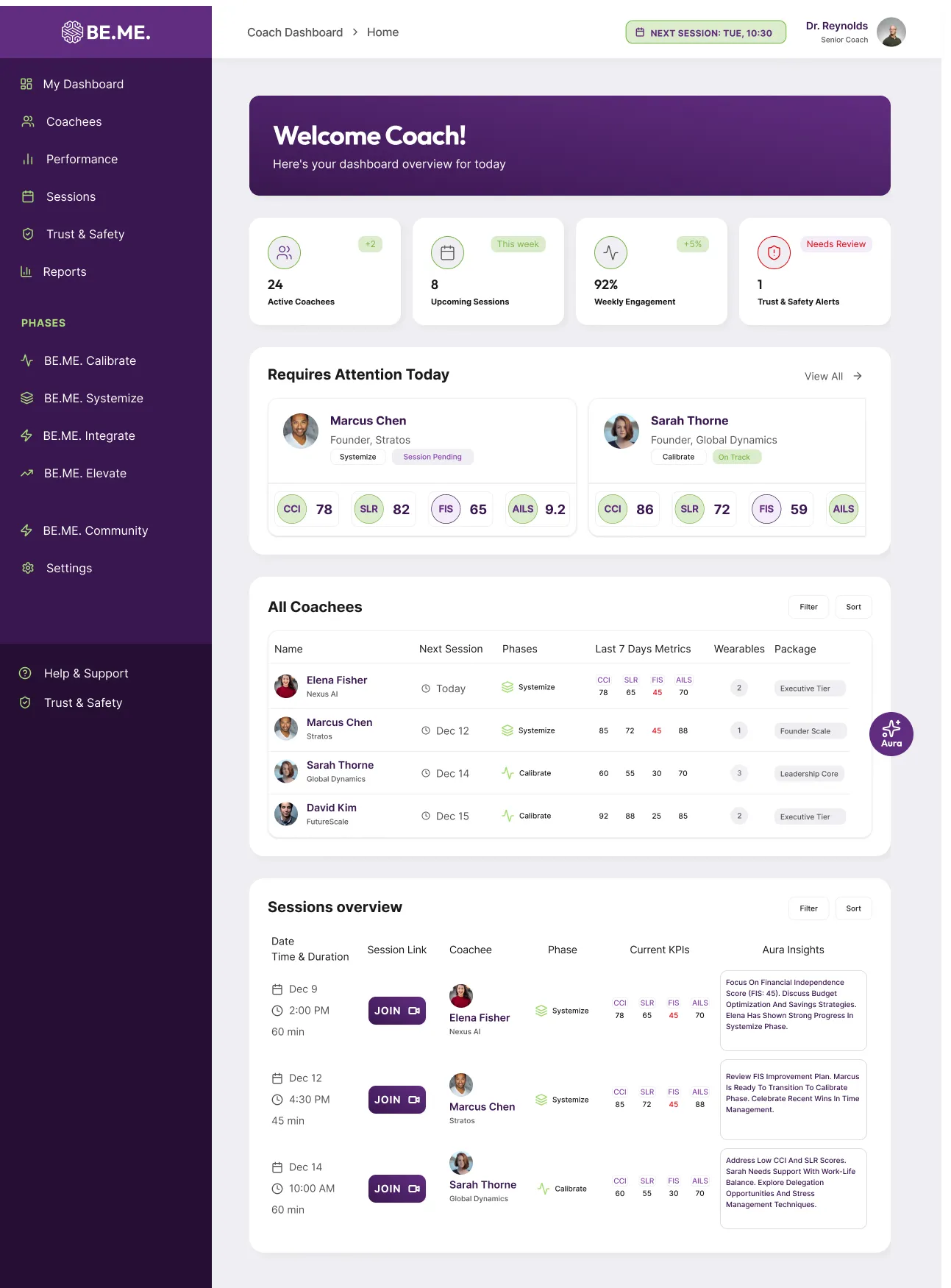
The UX work focused on the decisions that would make the MVP understandable. The landing experience framed the product around performance and cognitive clarity, onboarding taught the system in stages, the dashboard gave users a clear starting point and a way to interpret their state, and daily workflows turned the methodology into repeated product behavior. AI interactions were embedded into the journey rather than isolated in a chat surface, with progressive disclosure keeping the product usable without oversimplifying it.
Design System
The design system gave the MVP a stable foundation for iteration. It defined reusable components for onboarding, dashboard cards, and guidance surfaces, design tokens for type, spacing, color, and interaction states, and interaction principles for guidance and AI support, scalable foundations that kept the MVP coherent as the product direction evolved.
Key Takeaways
Complex systems become usable when the interface teaches only what the next decision requires, and AI works better as bounded product guidance than as a detached chatbot when the user needs trust and clarity. MVP definition is not about shrinking the vision, it is about choosing the smallest version that can prove the core behavior.
Depth
What was complex about BE.ME AI, and what I helped clarify.
- The BE.ME Operating System was structured, but many of its concepts were abstract and needed to become concrete product behavior.
- The product had to reduce cognitive load while still teaching users enough of the methodology to make the experience useful.
- AI guidance needed to feel supportive and embedded, not like a separate chatbot bolted onto the product.
- How the methodology should translate into onboarding, dashboard hierarchy, and daily user journeys.
- How Aura should behave as a product companion rather than a generic AI assistant.
- Which features belonged in the MVP and which could wait until after product validation.
Transformed an abstract methodology into a usable MVP experience, established the first scalable design system, and defined the interaction model for Aura without claiming unverified business metrics.
Outcomes
The project created a product foundation the founders could use to validate the BE.ME AI vision, communicate the MVP clearly, and continue refining the platform without losing the logic of the original methodology. It transformed an abstract methodology into a usable digital product, established the first scalable design system, defined Aura's interaction model, and delivered a production-ready MVP suitable for validation and investor conversations.
Solution visuals
Screens and visual references from BE.ME AI.
Related work
Adjacent projects.
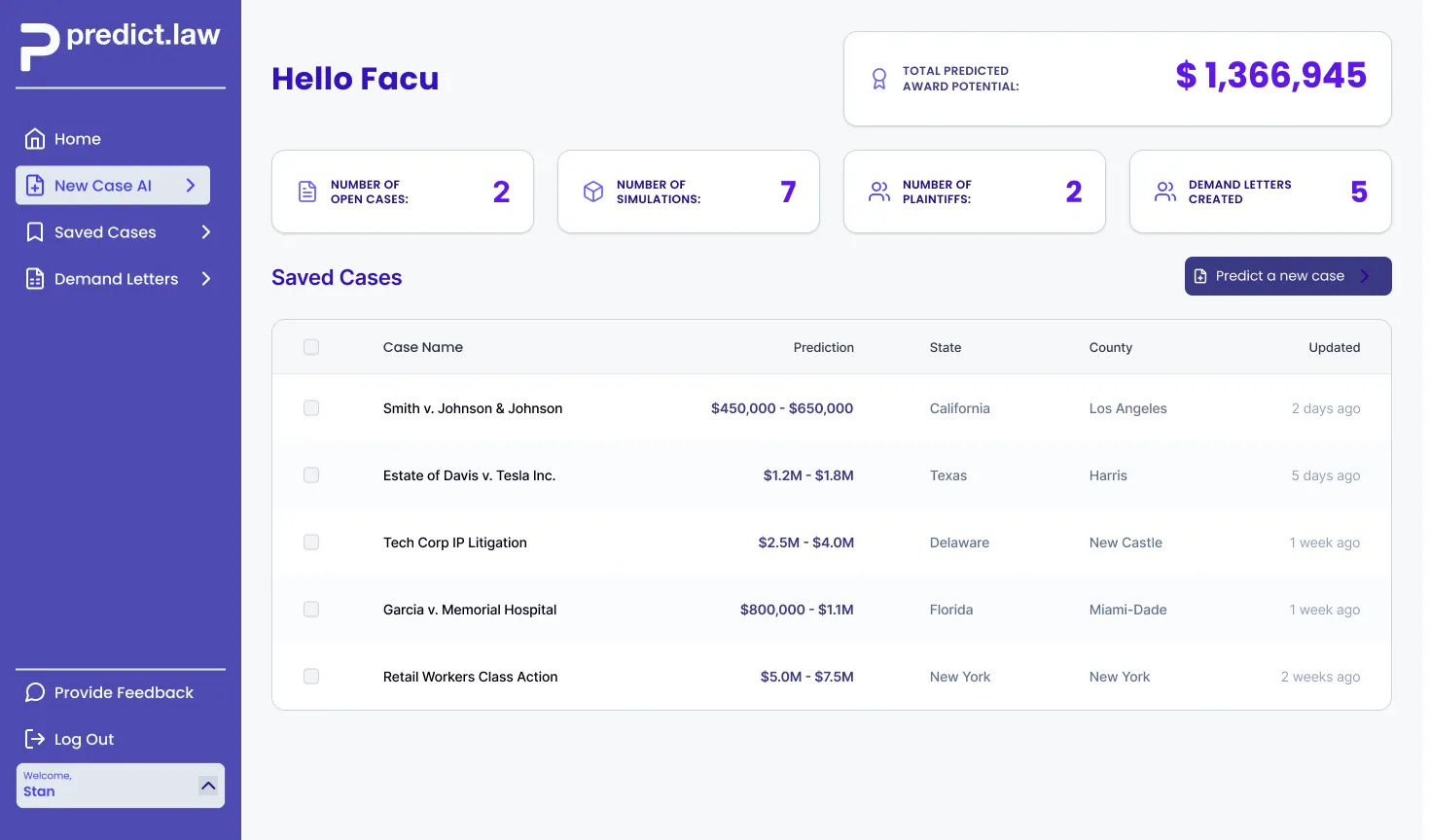
AI Legal Platform for Litigation Workflows
An AI-powered legal platform for plaintiff attorneys, rebuilt into a coherent, scalable product system across design systems, core litigation workflows, and mobile-first acquisition experiences.
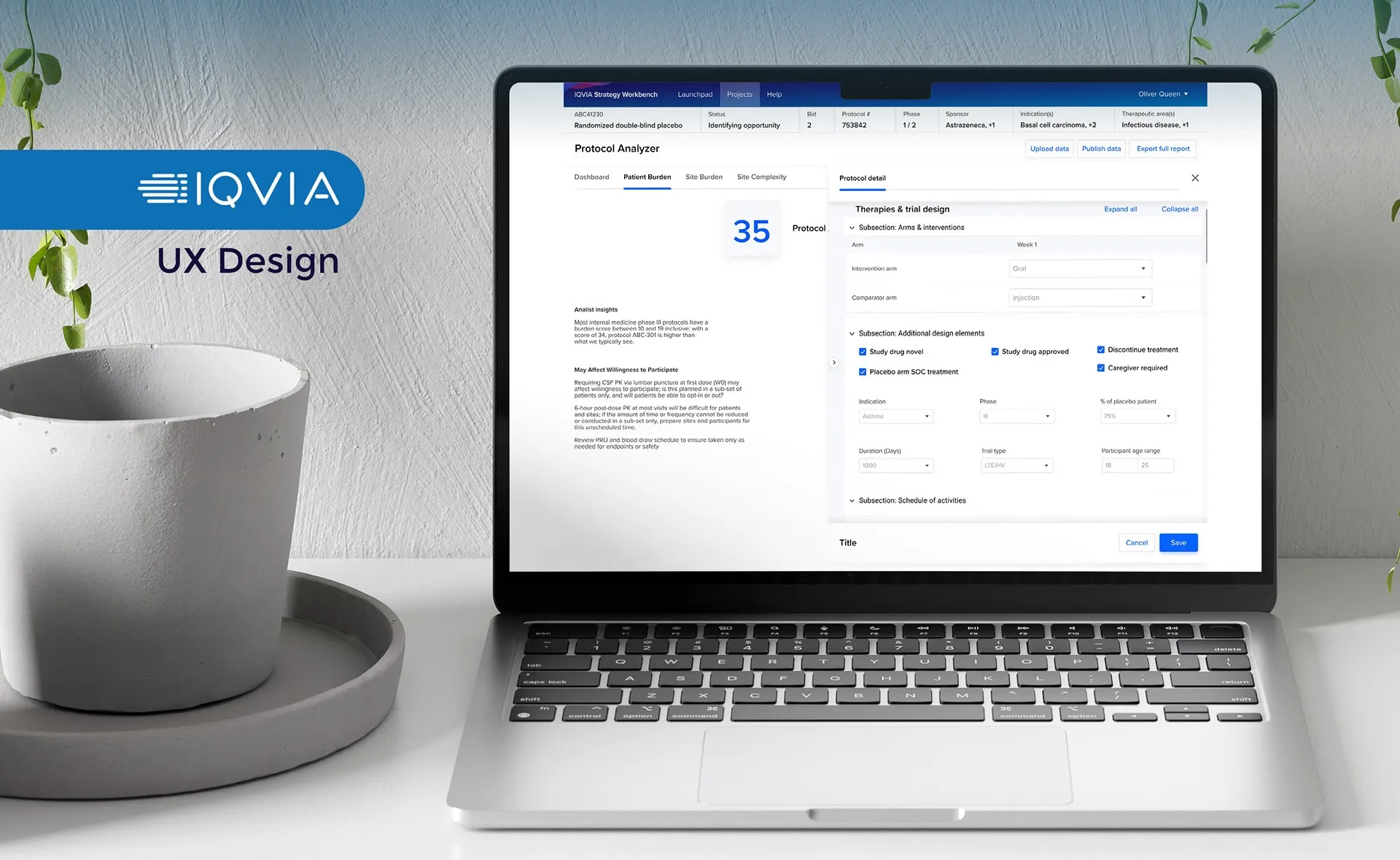
Enterprise Clinical Research Platforms
Led UX direction and design teams across enterprise clinical research platforms, focused on shared interaction patterns, design system foundations, and accessibility-first practice.