
Precision Agriculture / Mobile Product
Precision Agriculture Platforms
Designing across a proprietary in-field platform and its mobile companion for one of Latin America's leading precision agriculture ecosystems.
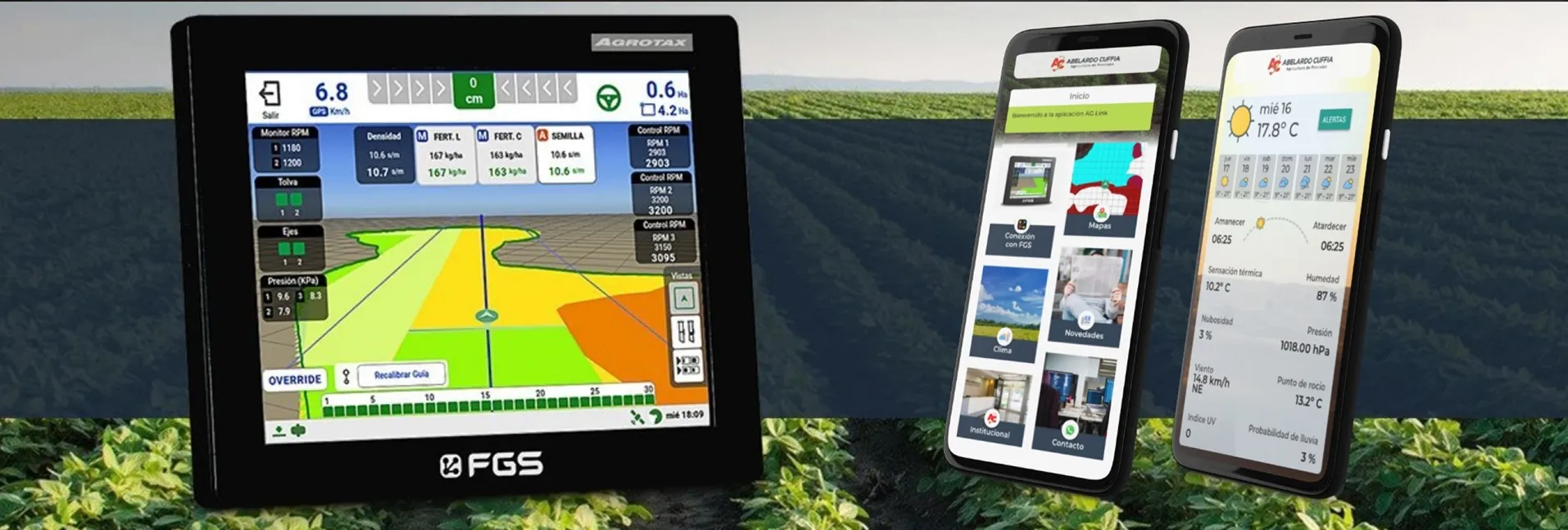
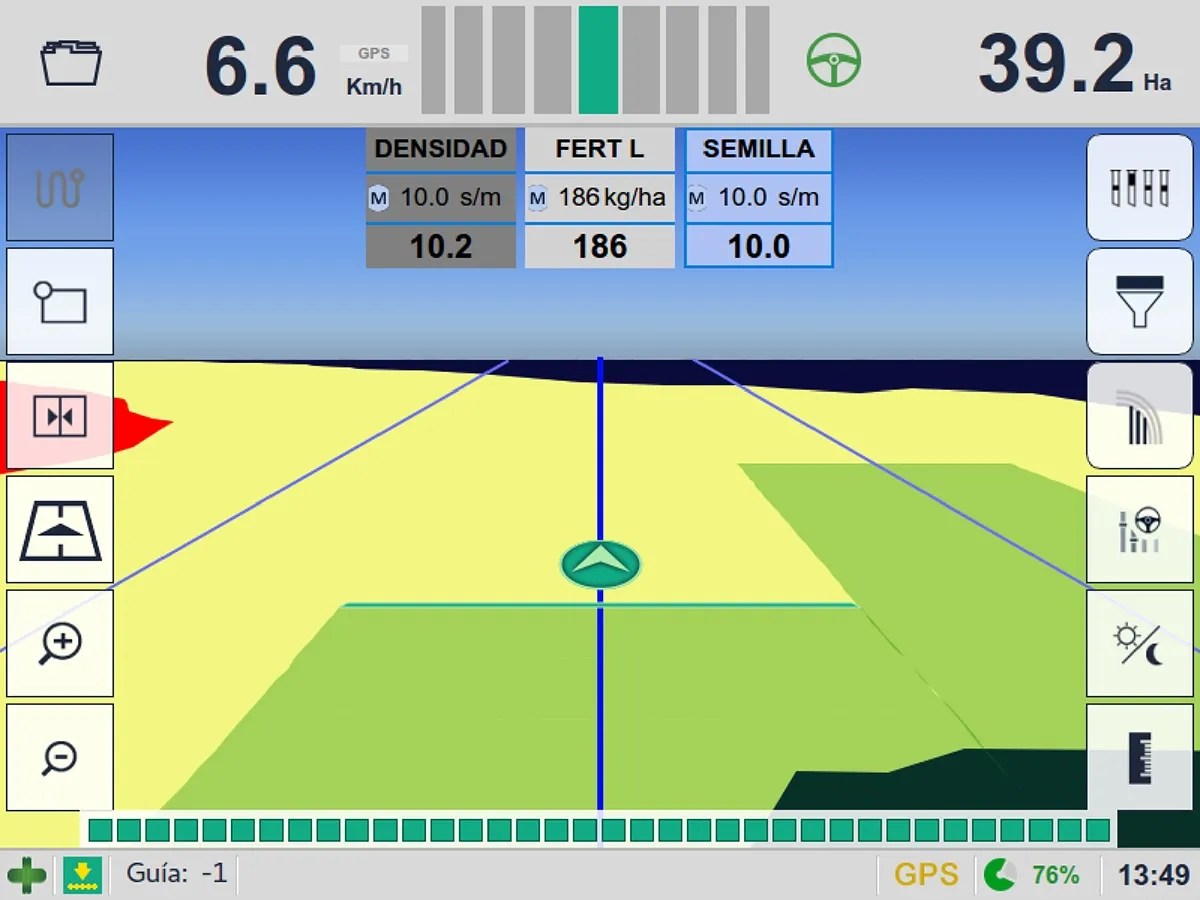
Abelardo Cuffia is one of the pioneers of precision agriculture in Latin America, developing advanced technology for professional farmers, contractors, and agribusinesses. Their primary product, FGS, is a sophisticated agricultural monitoring platform used with field equipment across the region.
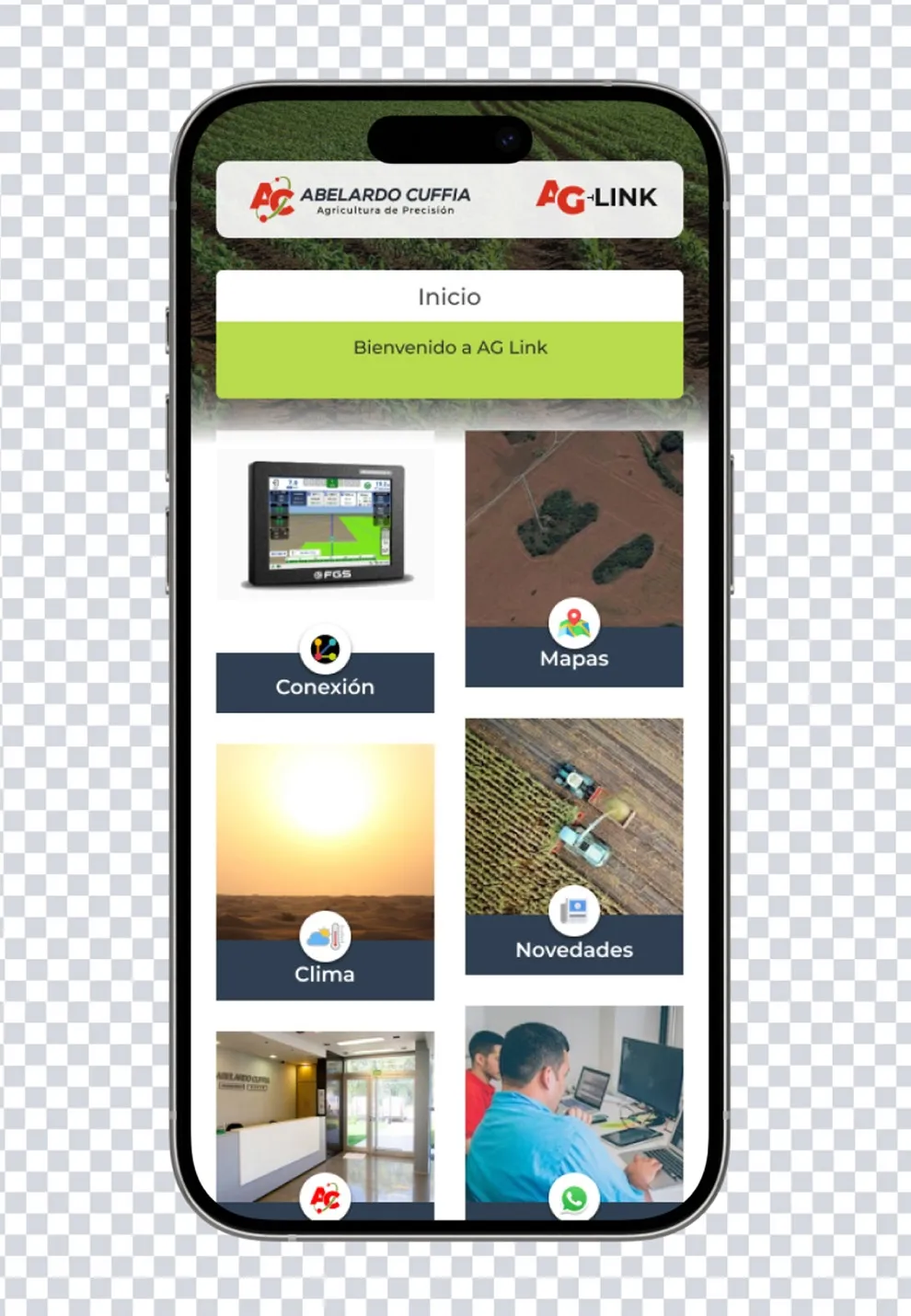
The project focused on designing AG Link, a mobile application connected to the FGS ecosystem. The objective was not to replace the main platform but to extend it into a mobile experience optimized for fast decision-making directly from the field.
I worked as Lead Product Designer across the full engagement, from discovery and research through information architecture, user flows, low-fidelity exploration, engineering collaboration, and complete high-fidelity UI production.
Design highlights
What changed in the experience.
Simplify complex agricultural data
A large operational dataset was distilled into the information that actually mattered in a field context.
Design for field conditions, not office environments
Screens and interactions were shaped around fast decisions, variable conditions, and operators with limited time.
Validate decisions with engineers early
Engineering collaboration was built into the design process from the beginning, not saved for handoff.
Reduce implementation friction
Every UX decision was evaluated against its engineering cost and impact on the existing FGS platform.
Prioritize clarity over feature density
The application focused on doing fewer things well rather than replicating everything available on desktop.
Build scalable design foundations
The design system and component structure supported the continued growth of the platform after the initial release.
Project Overview
Abelardo Cuffia had built FGS, a sophisticated agricultural monitoring platform used by professional farmers and contractors across Latin America. The product worked well on desktop, but operators needed to access critical equipment information directly from the field without returning to an office or cabin. AG Link was designed as the mobile companion to that ecosystem: a focused application that surfaced the right information at the right moment, optimized for real working conditions.
My Role
I led product design across the full engagement. I ran the discovery and field research, set the product direction and information architecture for AG Link, drove the continuous collaboration with engineering, and produced the complete high-fidelity UI through to developer handoff. As Lead Product Designer I owned the decisions about what the mobile product should be, not only how its screens looked.
The Challenge
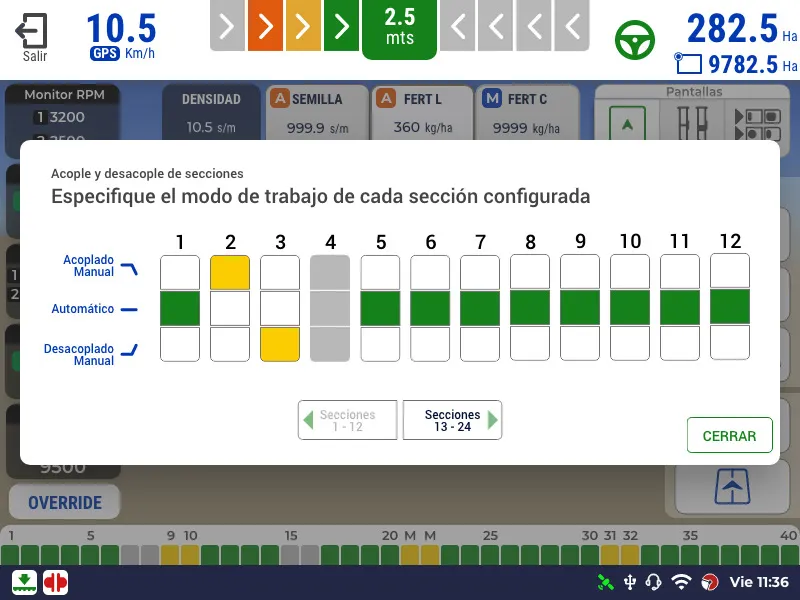
The desktop platform contained an enormous amount of agricultural data, multiple equipment states, and complex operational variables. The challenge was not building a smaller version of FGS. It was identifying what users actually needed while working in the field, what information should stay on desktop, and how to present complex operational data in a way that was immediately readable under real farming conditions. The application also needed to remain technically compatible with the existing product while keeping engineering effort realistic.
Discovery
Discovery lasted approximately 8 weeks and ran several research streams in parallel. Interviews and workshops brought together stakeholders, engineers, software developers, clients, professional farmers, and end users, alongside competitive analysis, market research, evaluation of similar agricultural products, and mapping of existing field workflows. The goal was a clear product direction, and a defined priority for what information actually mattered in the field, before any interface design began.
Low-Fidelity Exploration
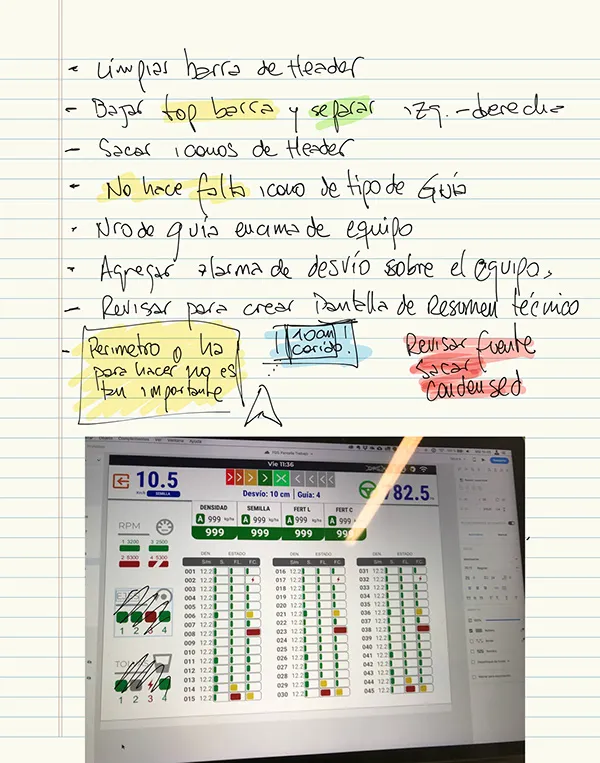
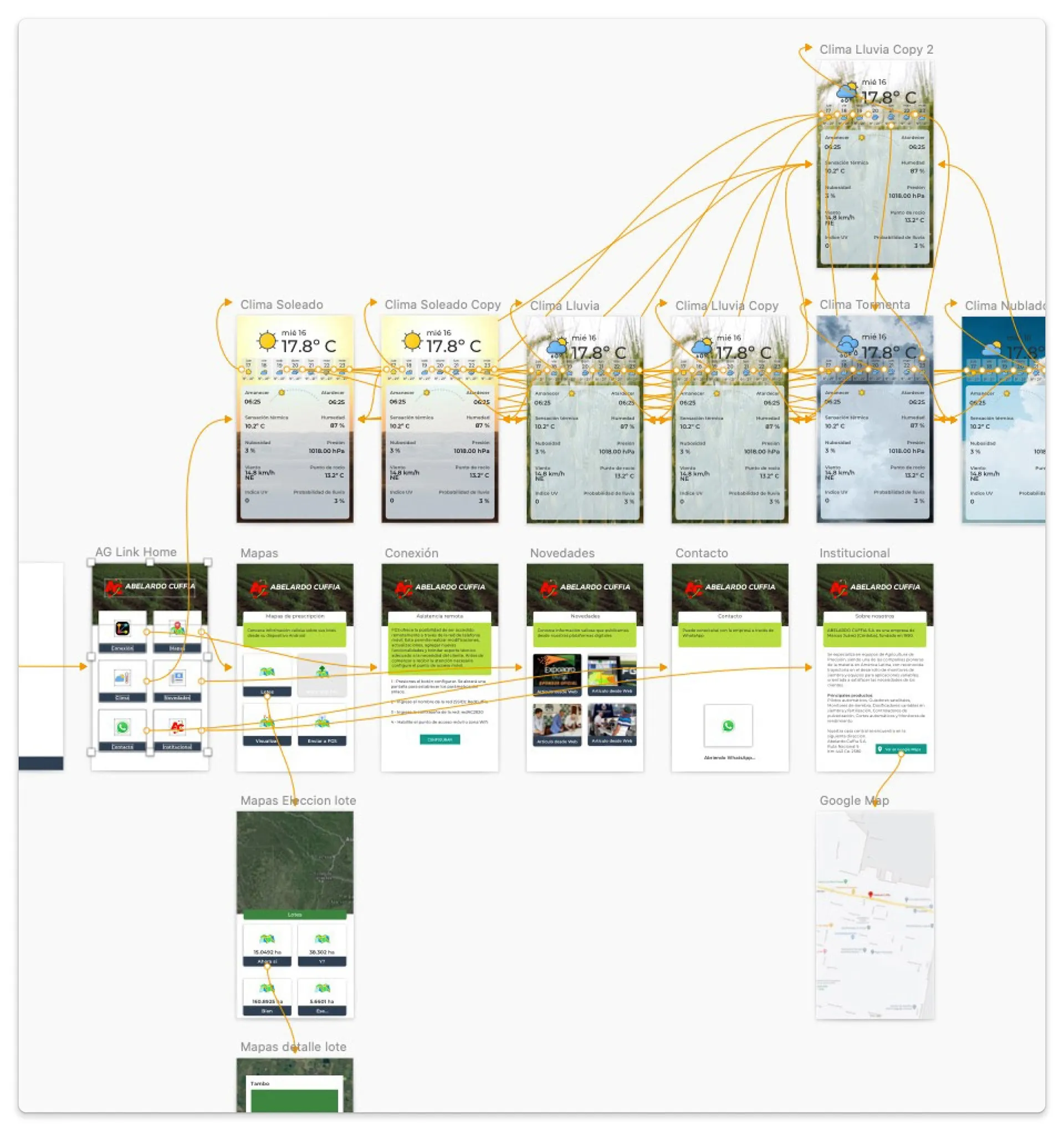
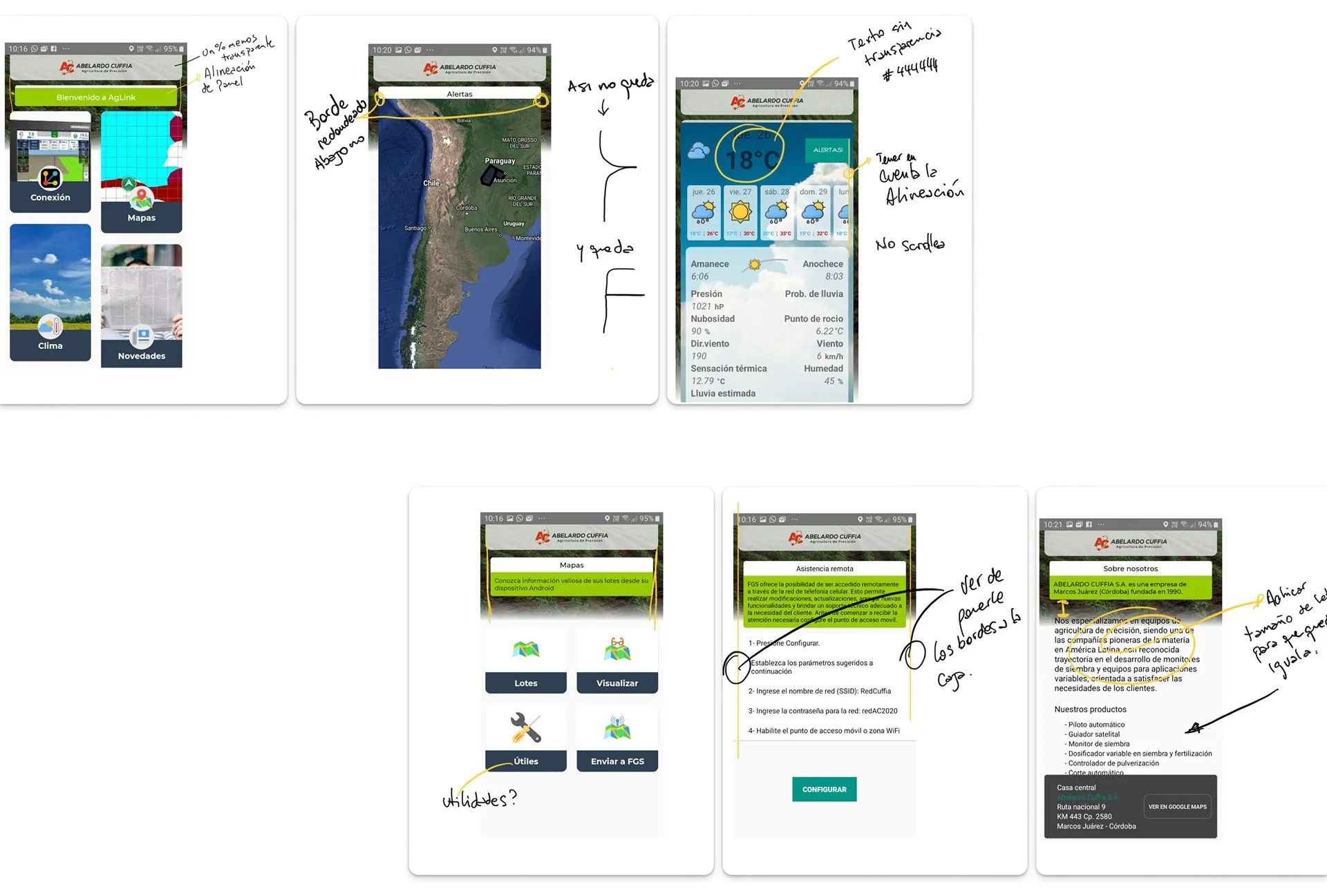
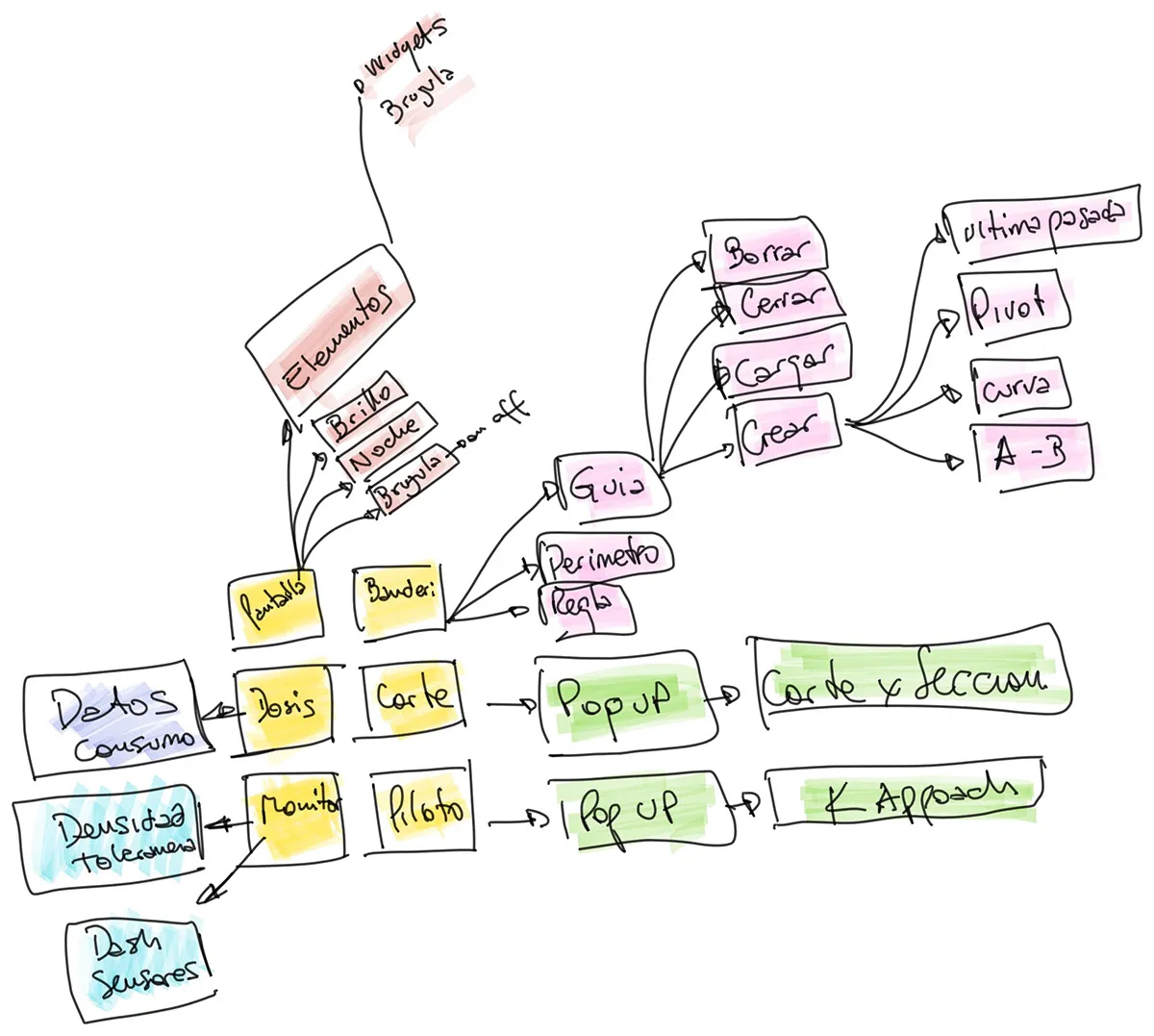
Initial design work focused on navigation structure, screen hierarchy, component placement, and information prioritization rather than visual refinement. Because agriculture workflows are highly specialized, many assumptions had to be validated before moving to higher fidelity. Numerous wireframes were tested internally and revised before any visual production work began. This phase was critical for aligning the team around what the mobile experience actually needed to do.
Engineering Collaboration
One defining aspect of the project was the continuous collaboration with the development team. Every significant UX decision was evaluated alongside engineering to understand implementation complexity, required backend changes, technical feasibility, and impact on the existing FGS platform. The objective was finding the best balance between the user experience the design called for and the implementation effort it would require. This collaboration happened throughout the project, not only at handoff.
High-Fidelity Design
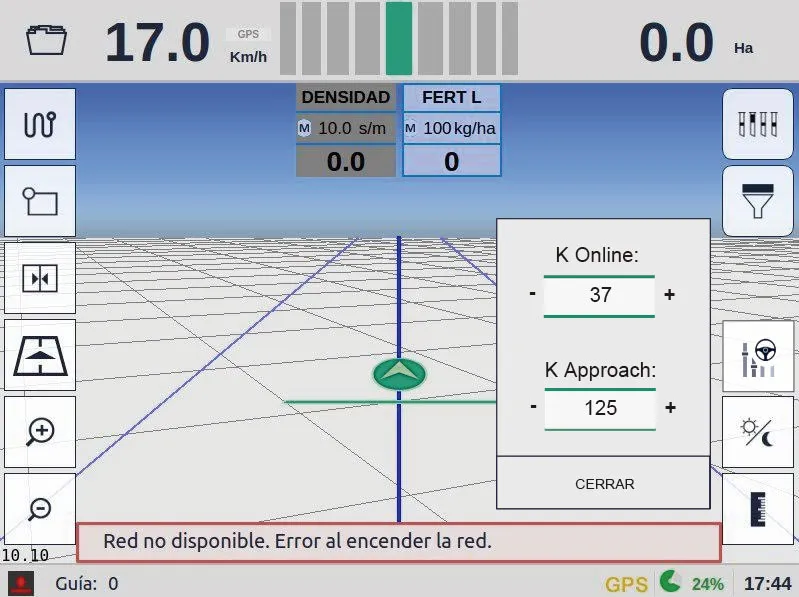
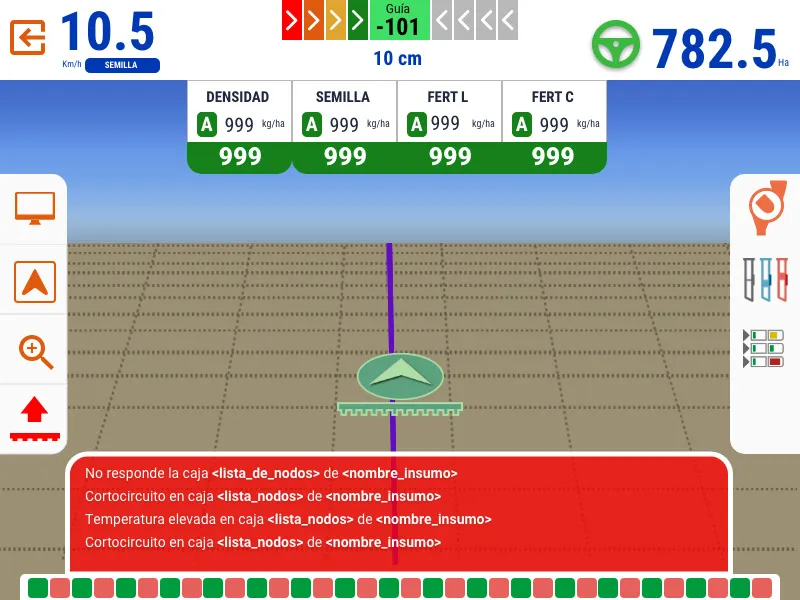
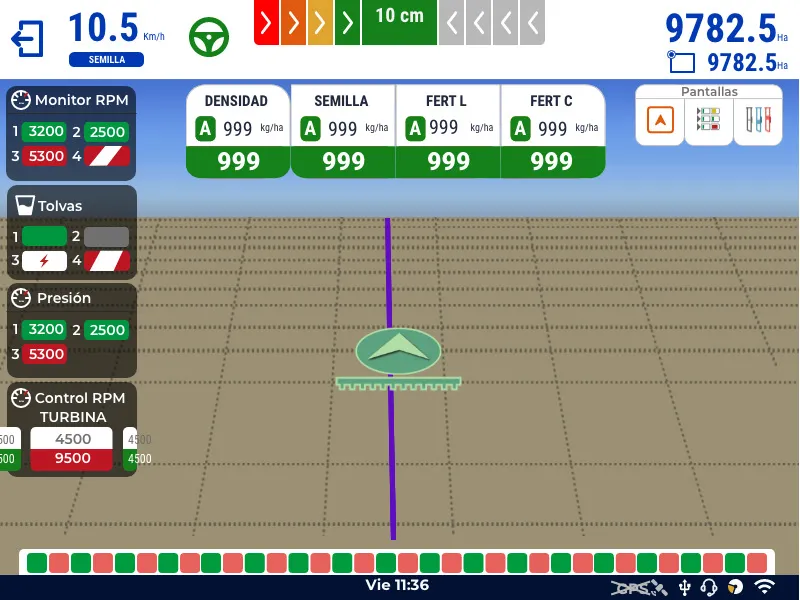
Once workflows had been validated across multiple review rounds with stakeholders, engineers, and users, I designed the complete high-fidelity production screens: production-ready UI across all primary states and scenarios, a reusable component library, interaction and state specifications, and developer-ready assets organized for implementation.
Product Opportunity
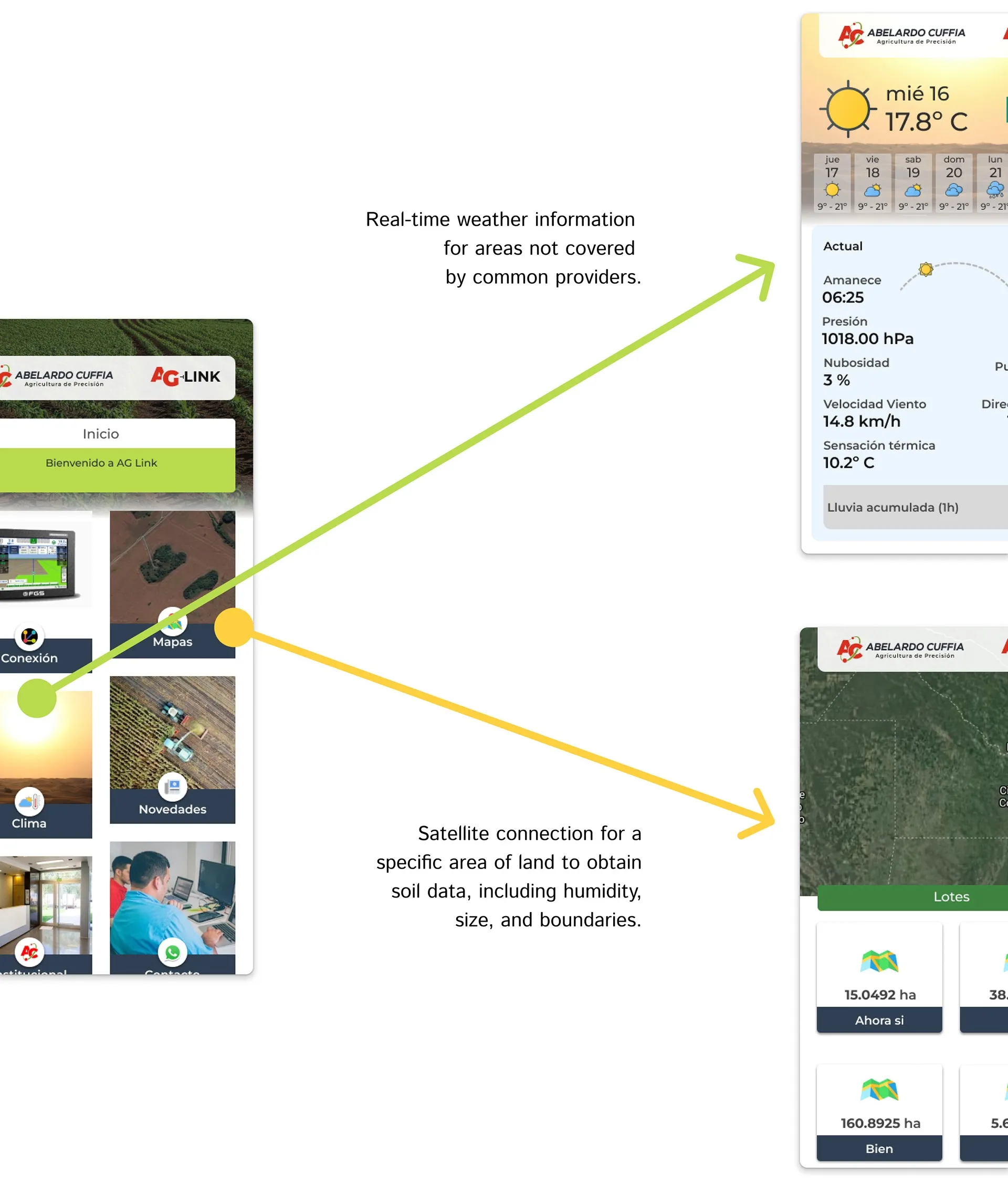
An important discovery during the project was that the mobile application could become more than a monitoring companion. Beyond surfacing operational information from FGS, AG Link also became an opportunity to expose additional services and product capabilities, increasing its value for customers. The design evolved beyond real-time monitoring into a broader product experience that could support future platform growth.
Depth
What was complex about Abelardo Cuffia, and what I helped clarify.
- The desktop platform contained an enormous amount of agricultural information that could not be ported directly to mobile.
- The application had to work under real field conditions: fast decision-making, variable connectivity, and operators who could not afford to slow down.
- Every UX decision had to be evaluated alongside engineering to understand implementation cost and impact on the existing FGS platform.
- Which information users truly needed in the field and what should remain in the desktop platform.
- How to simplify complex operational data for mobile without losing accuracy.
- Where the mobile application could become a broader product opportunity beyond simple monitoring.
Delivered a complete mobile companion experience connected to FGS, giving operators real-time access to equipment information and a scalable design foundation for future platform expansion.
Outcome
The project delivered a complete mobile companion experience connected to the FGS platform. Operators could monitor equipment remotely, access real-time operational information, review statistics, and make faster decisions while working in the field. The work also established a scalable design foundation that supported continued product expansion, and development continued beyond the initial release, with new screens and workflows added over time as the platform grew.
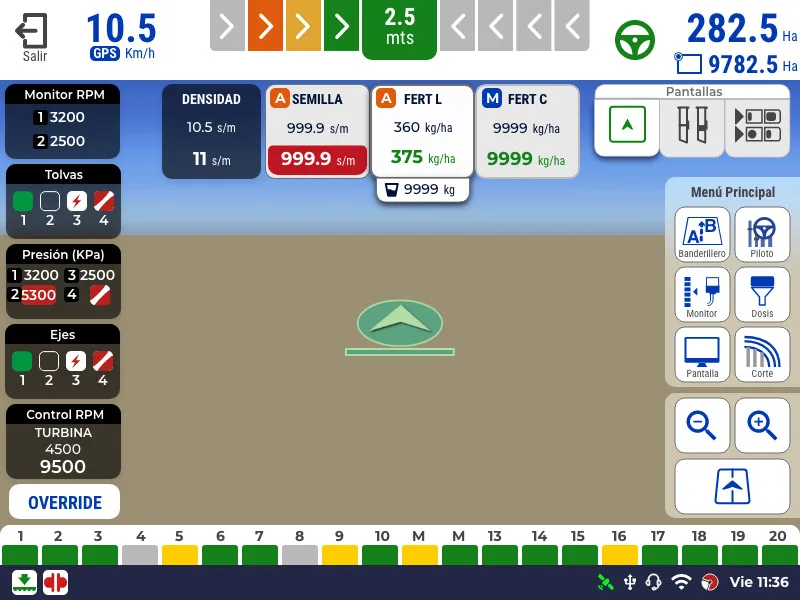
Solution visuals
Screens and visual references from Abelardo Cuffia.
Related work
Adjacent projects.
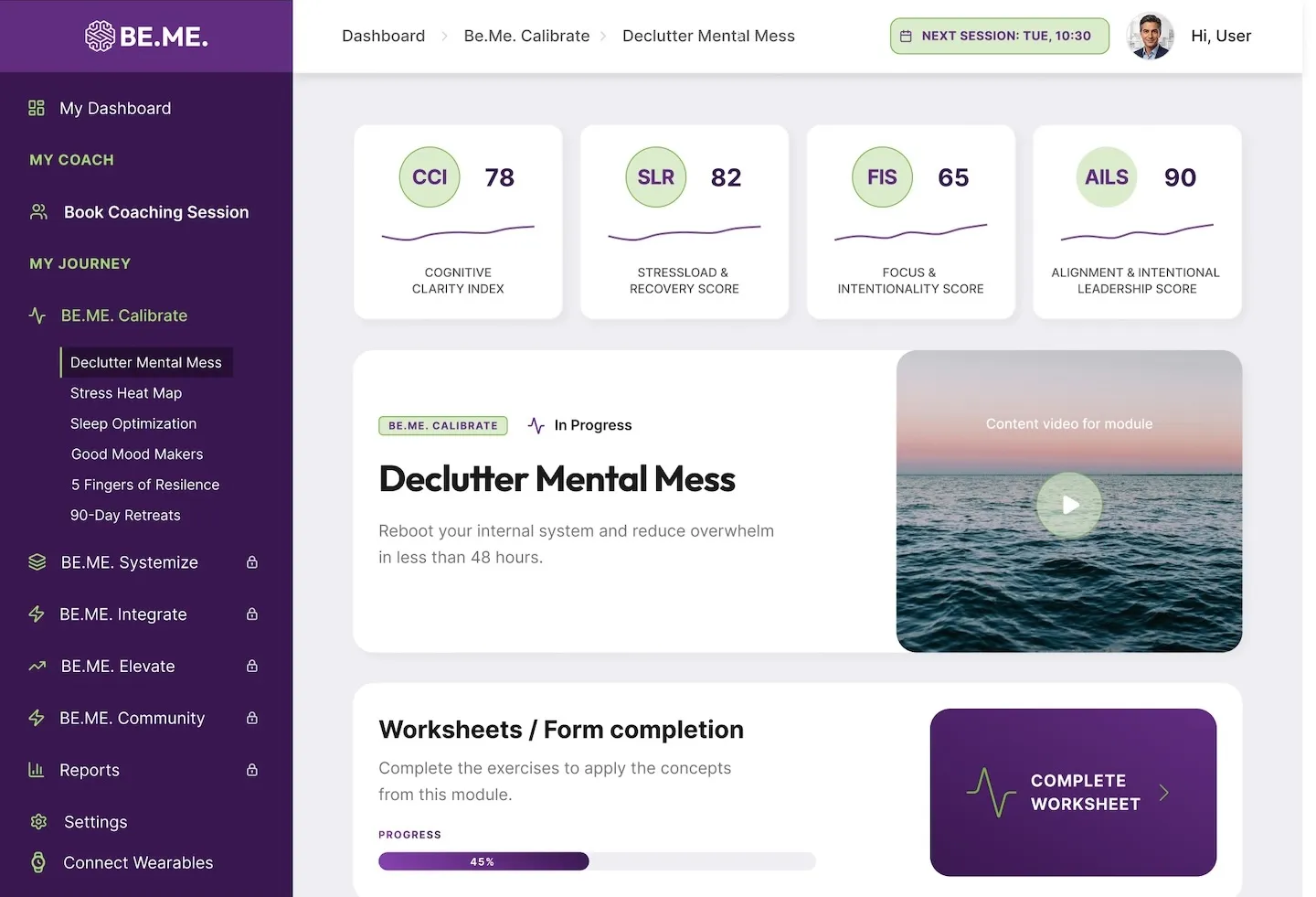
Mental Health Hybrid app
An early-stage AI product shaped from a human-performance methodology into a complete MVP experience with onboarding, dashboard structure, daily workflows, and Aura as an integrated product guide.
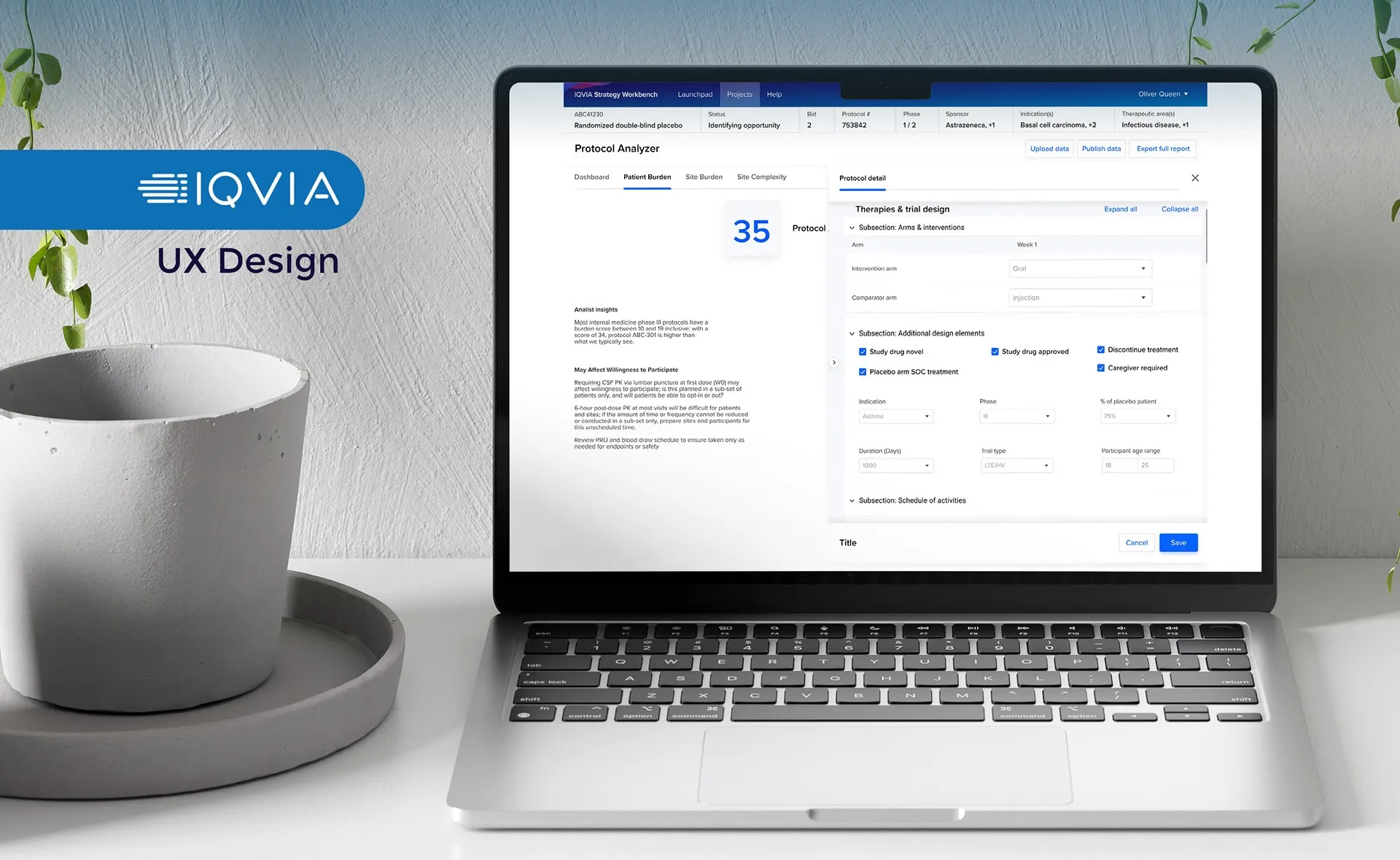
Enterprise Clinical Research Platforms
Led UX direction and design teams across enterprise clinical research platforms, focused on shared interaction patterns, design system foundations, and accessibility-first practice.